A Legacy of Hands and Healing: From Tradition to Gut-Brain Science
We often hear people carrying their stress on their shoulders, but what does it mean when stress immediately settles into your stomach?
I personally know the feeling. A subtle ache in the abdomen. Tightness underneath the ribs. A flutter in the gut. Sometimes nausea. Sometimes bloating. Sometimes a strange sensation that feels emotion and physical. We often describe it casually as “a gut feeling,” but physiologically, there is more.
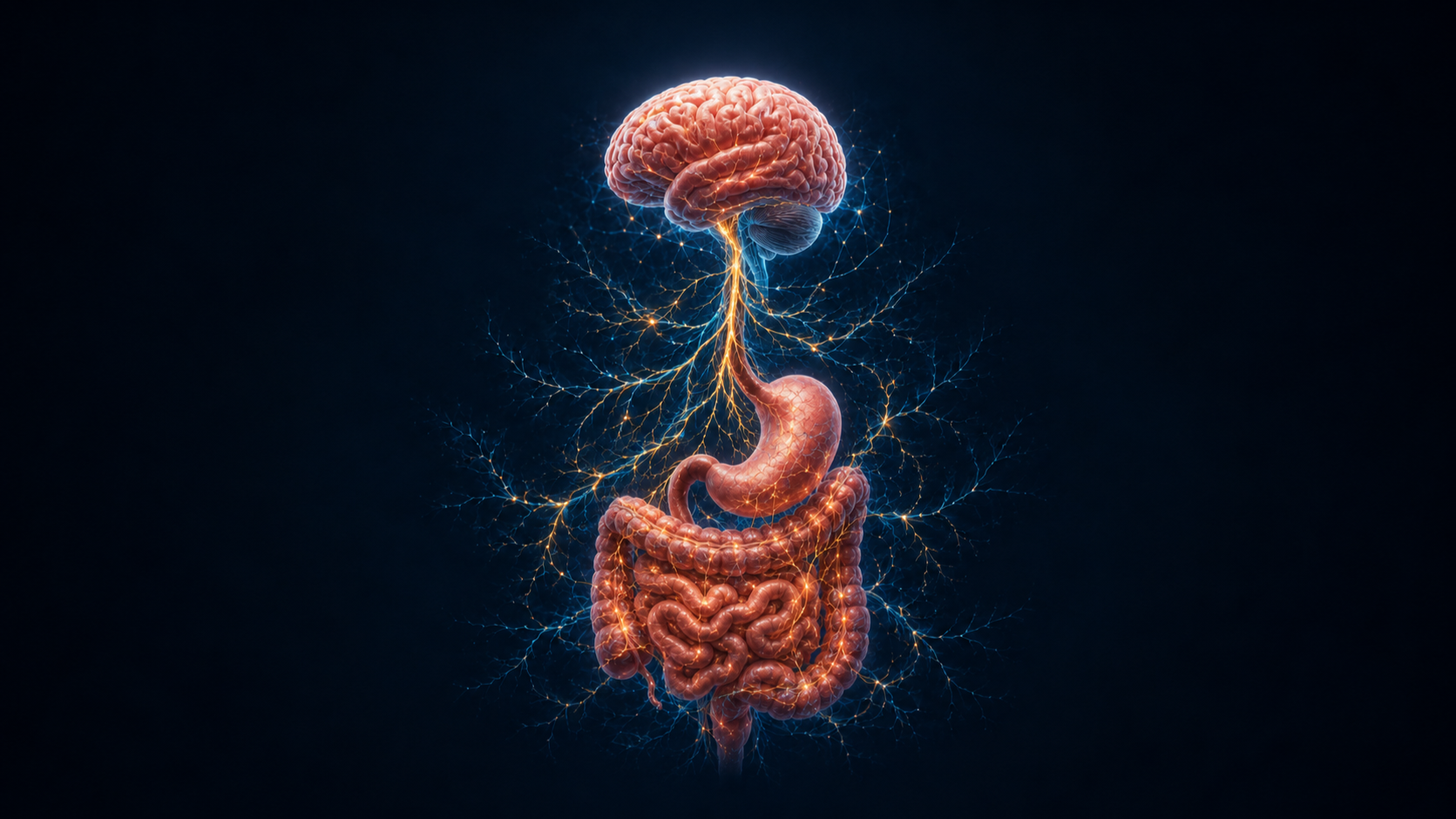
Your gut and your brain are constantly communicating.
Long before I understood the science behind this, I questioned and wondered about the stories my great-grandmother in Mexico passed down. She was known as a healer in her community. People would come to her with stomach discomfort, back pain, digestive problems, or simply feeling off. One of the places she often worked with her hands was just beneath the xiphoid process, around the region where the liver and gallbladder sit.
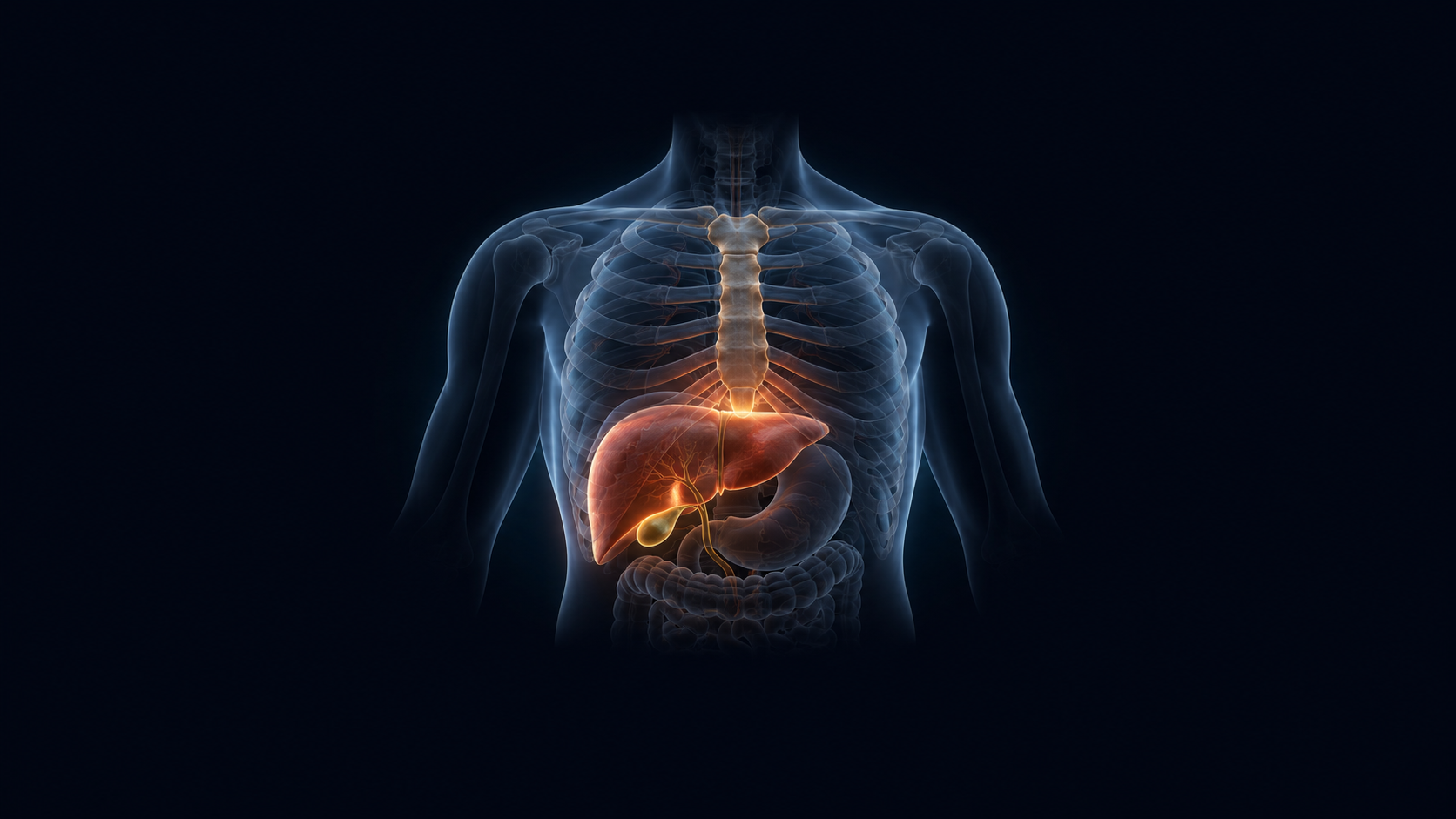
At the time, she didn’t speak in terms like autonomic nervous system, vagal tone, or gut-brain axis. She simply understood through experience that when that area became “stuck” or guarded, people suffered.
And with what I know now, she was more right than she even knew.
She grew up around animals, food preparation, farming, and survival. She understood bile. She understood digestion. She understood that stagnation inside the body affected how people moved, felt, and behaved. What fascinates me now is how modern physiology continues to make sense of those “intuitive” observations.
Today we know the digestive system has its own intricate nervous system called the enteric nervous system. Millions of neurons line the gut. The Vagus Nerve acts like a communication highway between the abdomen and the brain. Stress hormones alter digestion, breathing, blood flow, gut motility, and even the sensitivity of the intestines themselves.
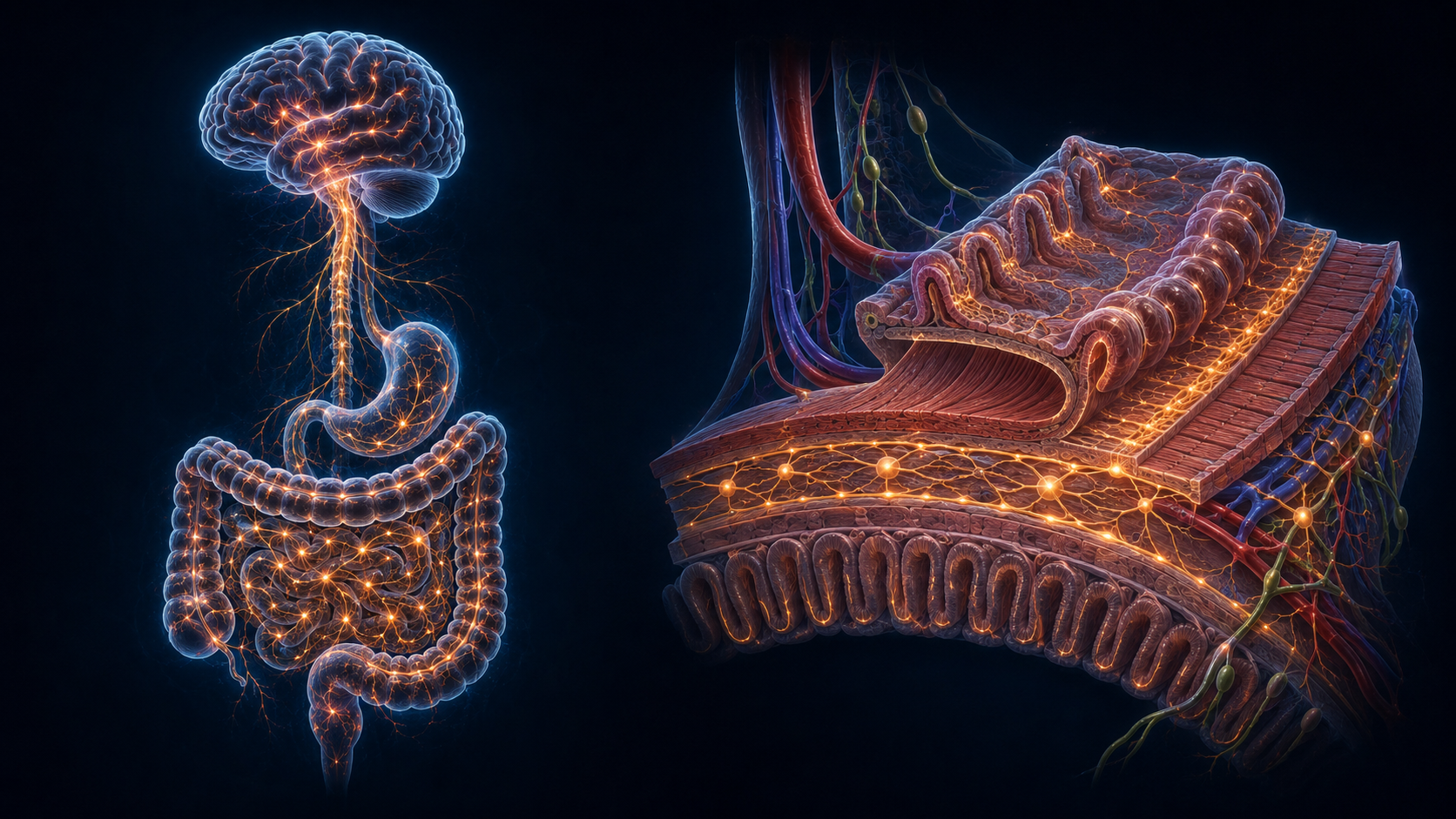
In other words, stress becomes physical.
When somebody feels overwhelmed, the diaphragm often tightens. Breathing becomes shallow. The ribcage stiffens. The abdomen guards itself. Blood flow shifts. Digestion slows. Some people feel it as butterflies. Others feel pressure, cramping, reflux, or discomfort beneath the ribs. The body moves into protection mode.
This is something I’ve repeatedly observed through the development of the HAM model here at Neuro Muscle Works and with the patients I treat at The Hunstman Cancer Institute.
Over years of working with patients that scale from fit, active, healthy athletes to overwhelmed, immune compromised patients and everything in between, I started recognizing how frequently chronic stress patterns showed up physically in the abdomen, ribcage, diaphragm, and surrounding musculature. The body adapts to emotional and physiological stress the same way it adapts to mechanical stress: through compensation and protection.
Most often the abdomen is not necessarily painful, but can certainly be guarded. This is why the abdomen can be very sensitive to foreign touch (our own hands won’t cause the same response) such as in when we are being tickled. Hypersensitivity can give us clues of a nervous system that no longer feels safe enough to fully relax.
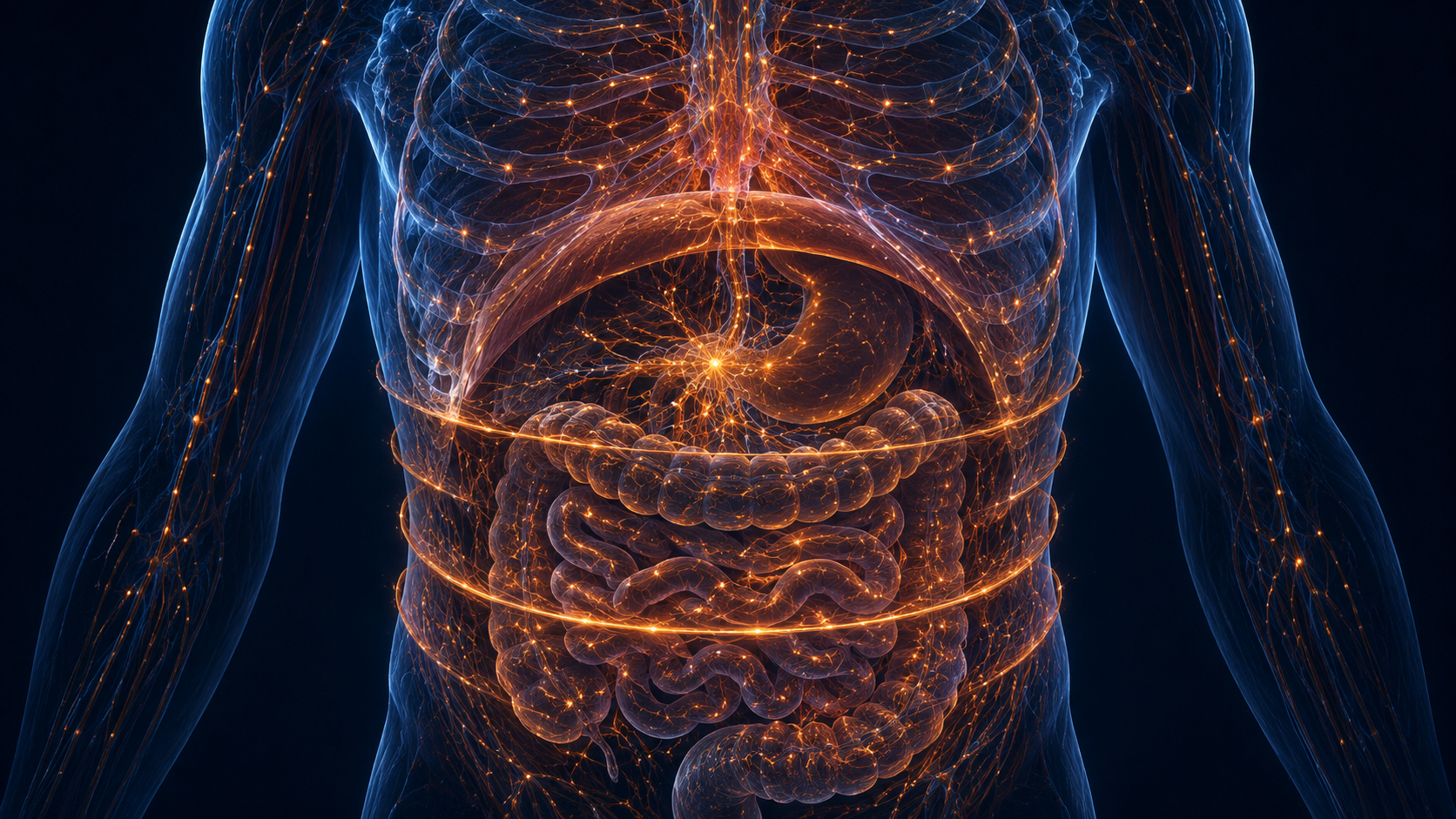
My great-grandmother may never have read a research paper on the gut-brain axis, but she understood that the abdomen held tension connected to the rest of the body. She understood that touch, pressure, breathing, and calming the area could change how somebody felt globally.
Now we can explain some of the mechanisms behind it due to technological advancements.
We know breathing mechanics influence the nervous system. We know chronic sympathetic dominance alters digestion. We know the diaphragm mechanically influences pressure systems, circulation, and lymphatic flow. We know abdominal tension can influence posture, spinal mechanics, and even pain perception.
But beyond all the physiology, there’s something deeper here worth respecting. We must listen to our bodies.
A minor discomfort in the gut during stress is not random. It may be the nervous system communicating long before symptoms become louder. The body has always had its own language. Some people learn it through science. Others learn it through observation, touch, and generations of experience.
Maybe the most fascinating part is realizing both paths can lead to the same truth.