The Dura Mater: The Protective Shield of Your Brain and Spinal Cord
When most people think about the nervous system, they think about the brain, the spinal cord, or perhaps the nerves that travel throughout the body. Rarely do they think about the structure that protects all of them: the dura mater.
Yet this remarkable tissue may be one of the most important and least appreciated structures in the human body.
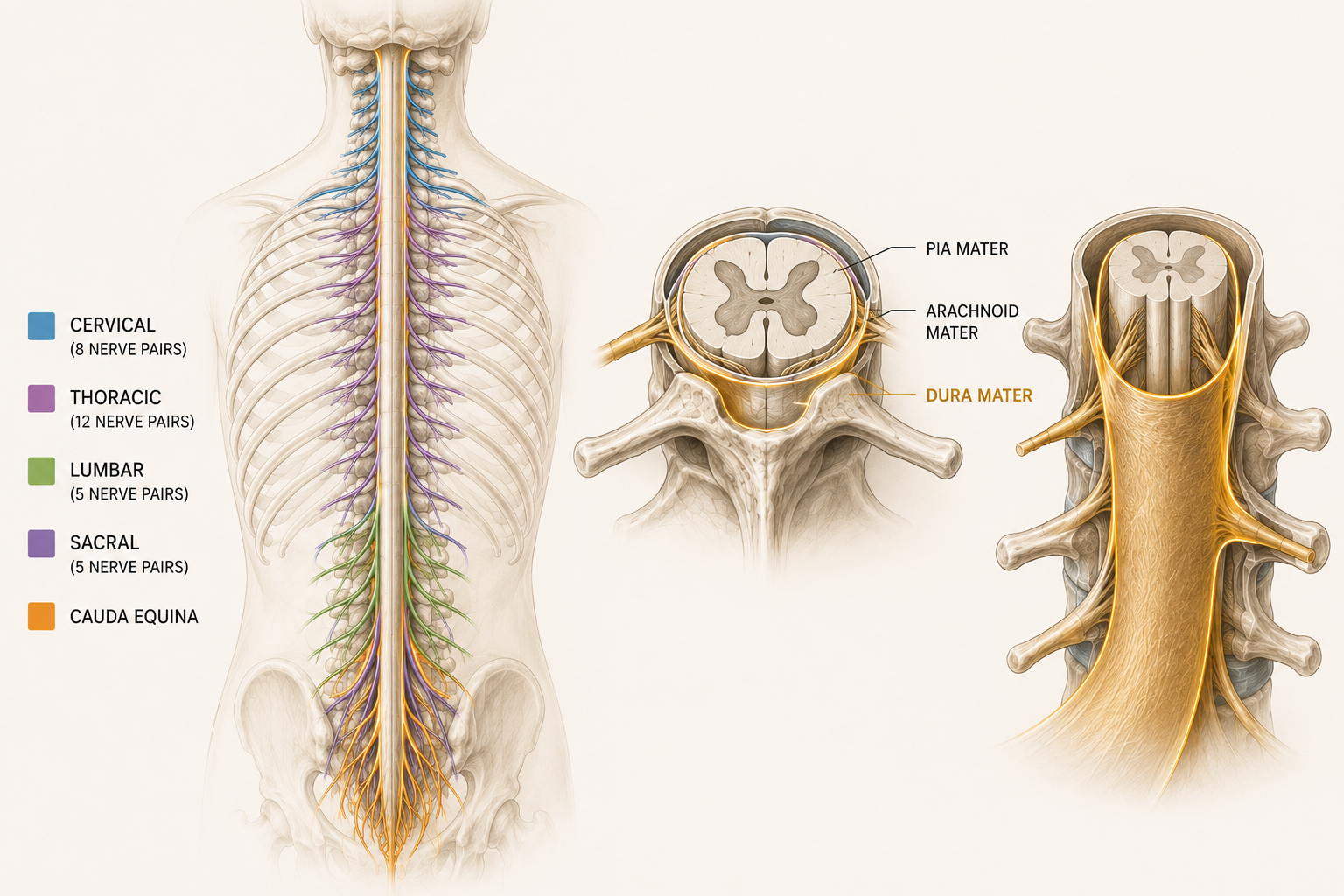
What Is the Dura Mater?
The word dura comes from the Latin phrase dura mater, meaning “tough mother.” It is the outermost and strongest of the three membranes, called the meninges, that surround the brain and spinal cord.
Imagine placing a delicate electrical cable inside a thick, durable protective sleeve. The sleeve doesn’t conduct electricity, but it protects the wires inside from damage.
The dura mater serves a similar role. It surrounds your central nervous system, helping protect it from excessive movement and external forces while housing important blood vessels and allowing cerebrospinal fluid to circulate around the brain and spinal cord.
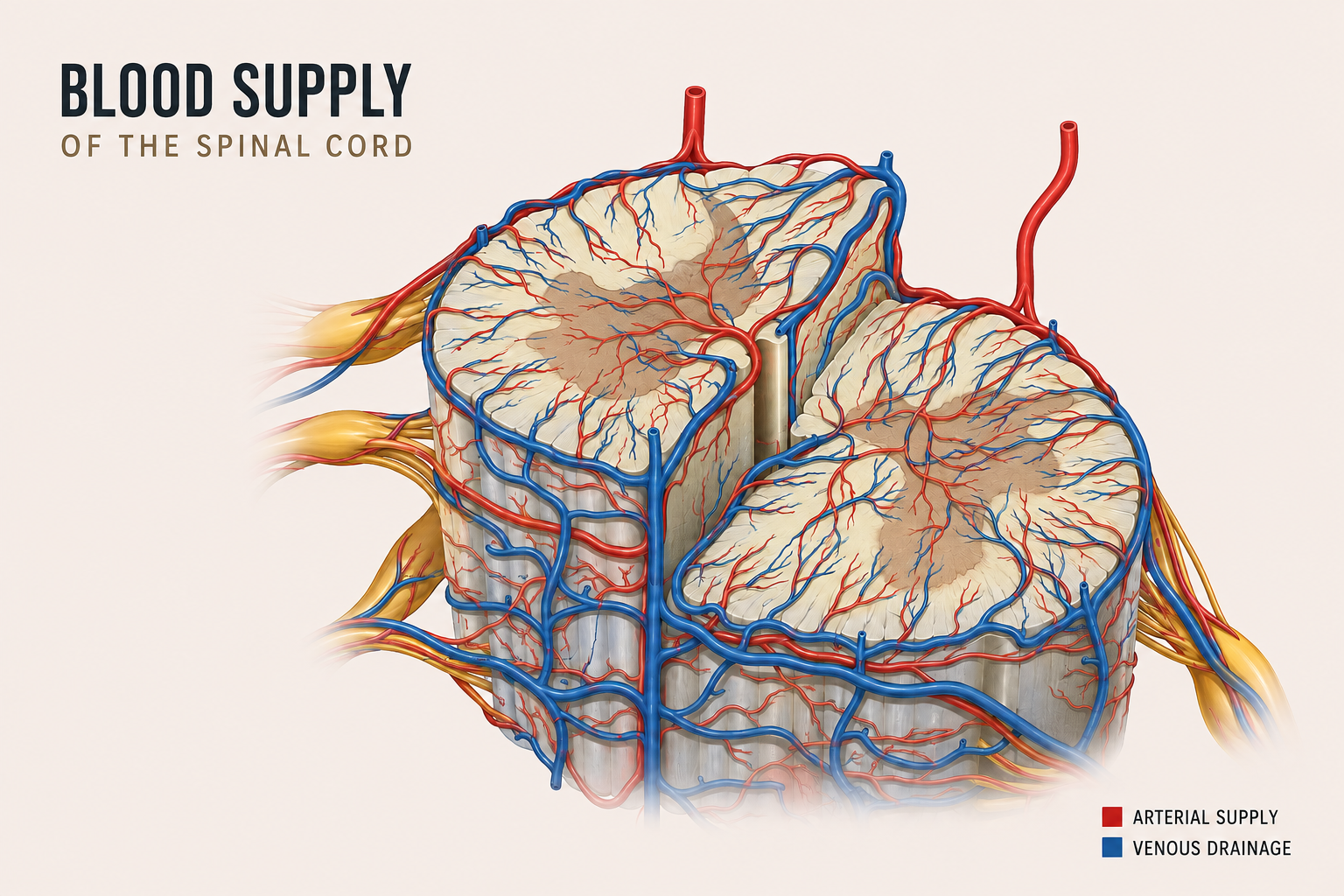
More Than Just a Protective Covering
One of the fascinating aspects of the dura mater is that it isn’t simply wrapped around the brain and floating freely inside the body.
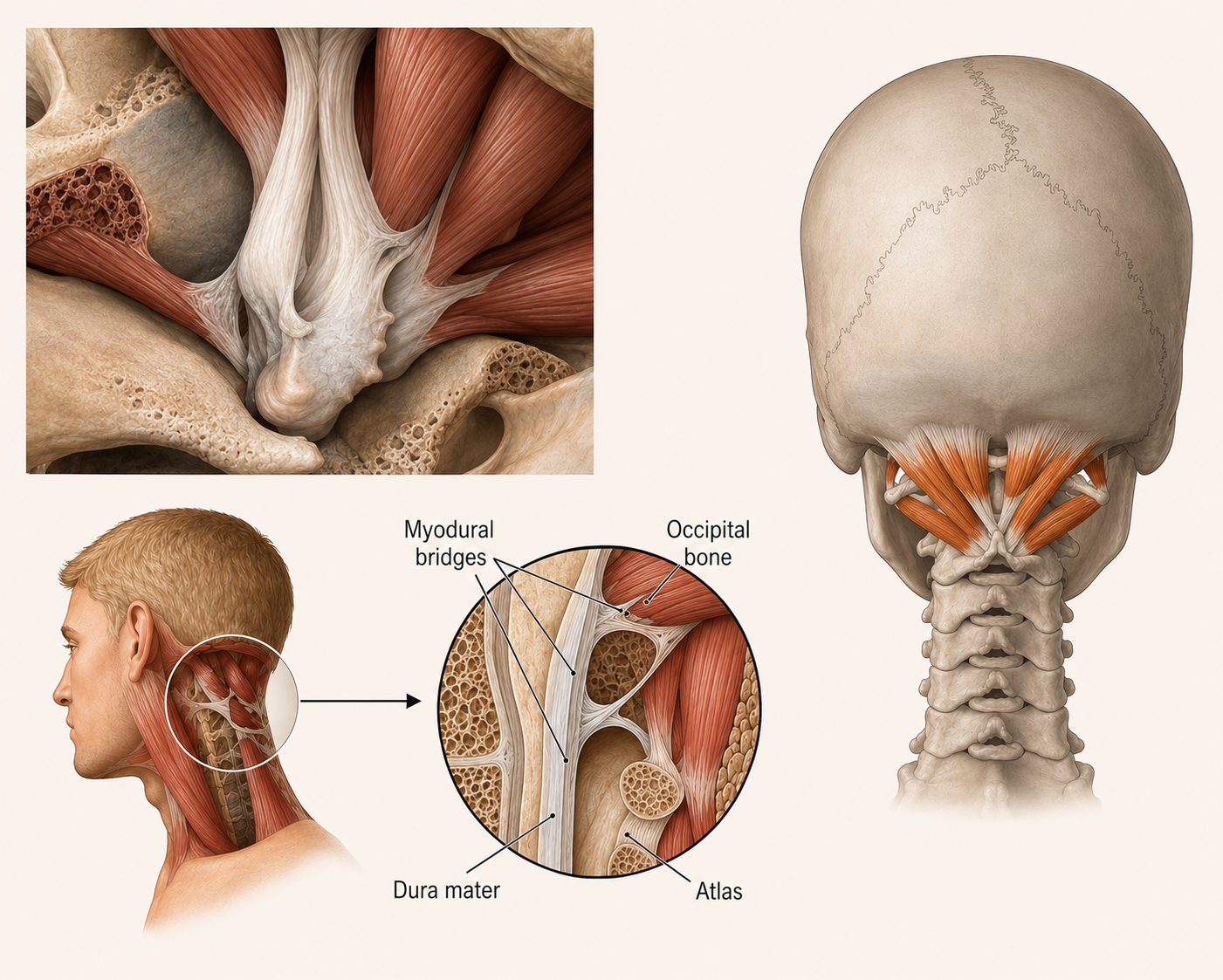
As it continues down the spinal canal, it forms anatomical connections with several structures of the spine, including:
The ligamentum flavum
The interspinous ligaments
Connective tissues around the upper cervical spine
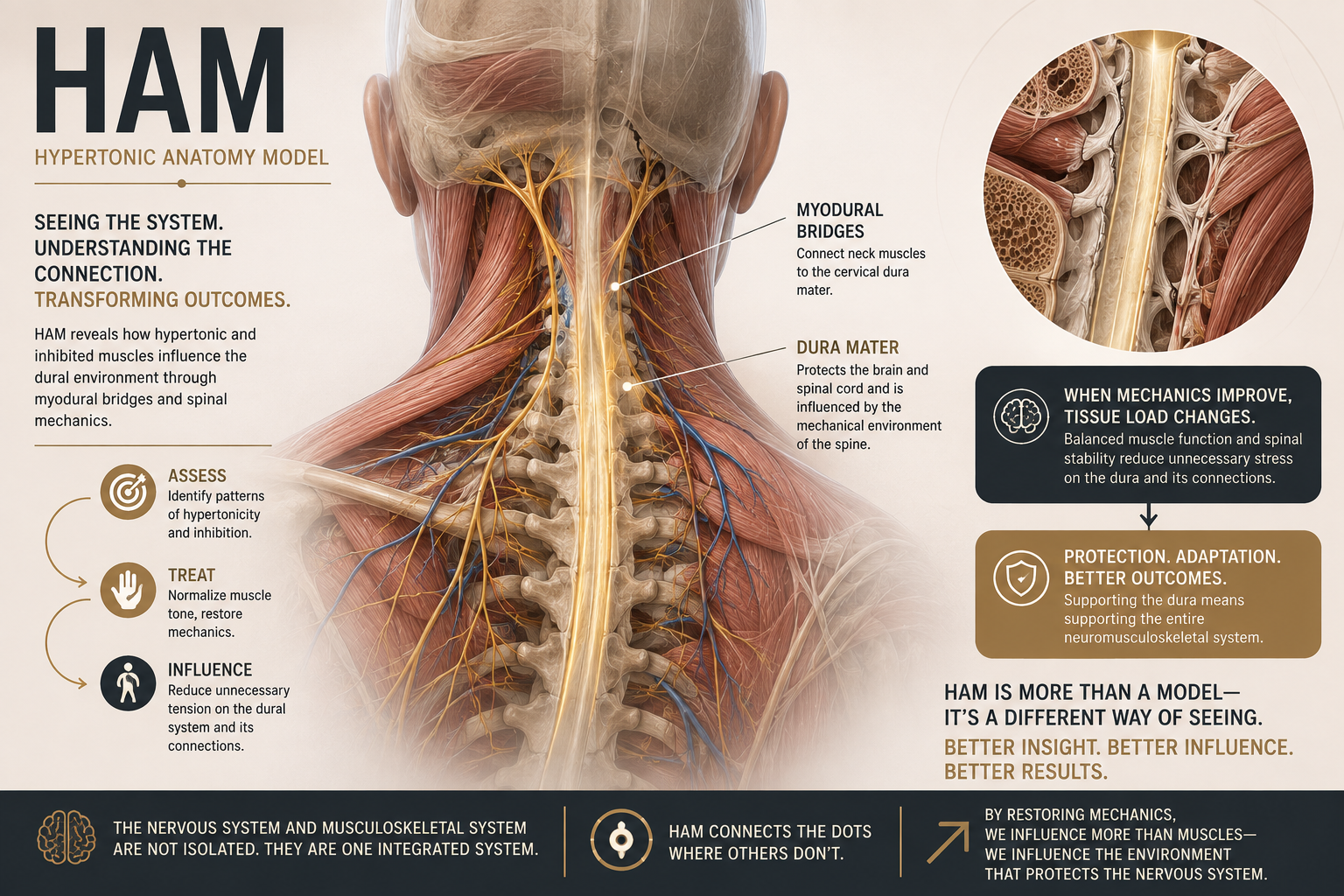
Specialized connective tissue bridges between certain neck muscles and the cervical dura (known as the myodural bridge)
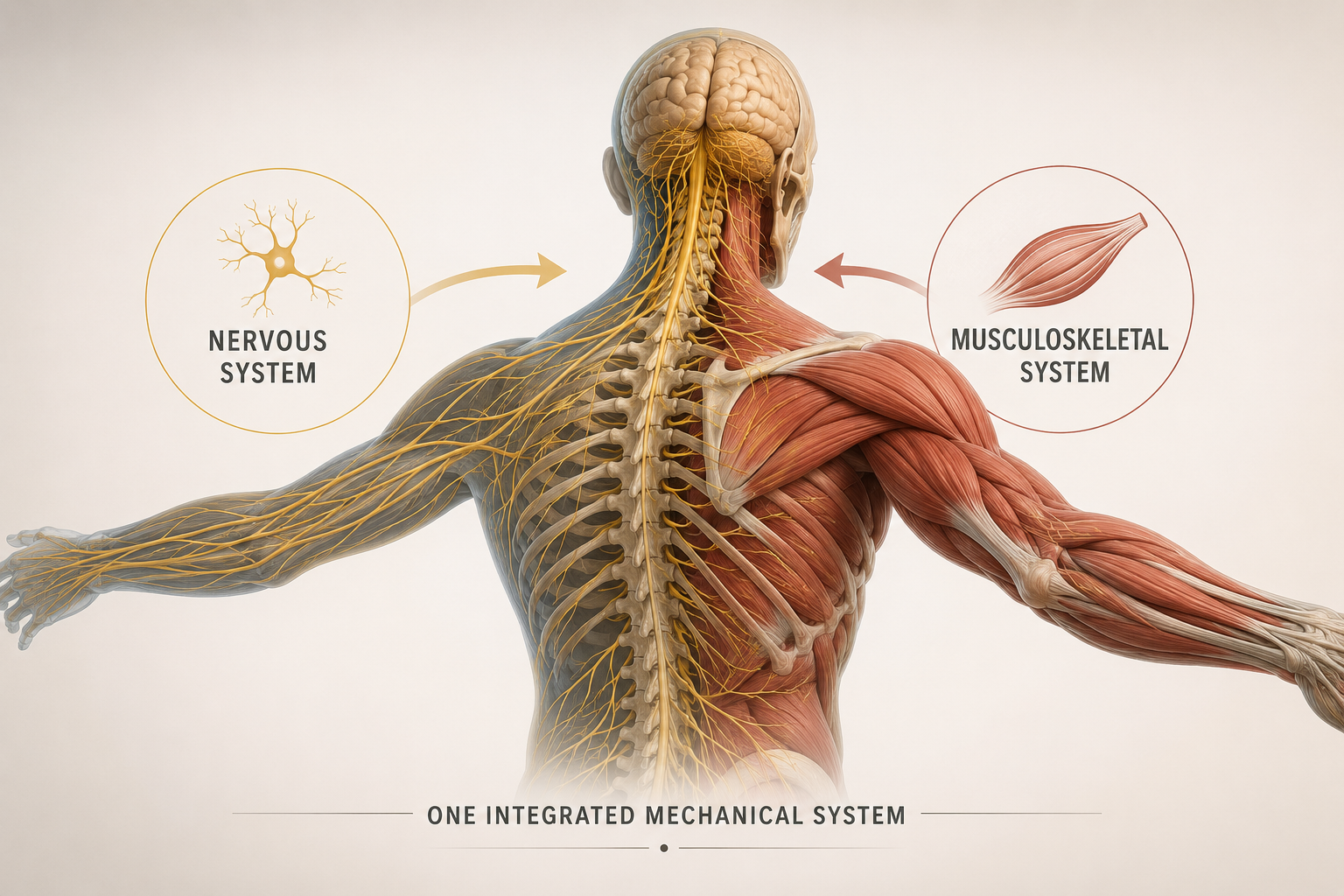
These connections remind us that the nervous system and the musculoskeletal system are not isolated from one another. They are part of one integrated mechanical system.
Why Does This Matter?
Every day your spine bends, twists, reaches, lifts, and absorbs thousands of small forces.
A healthy spine distributes these forces efficiently.
When movement becomes restricted, joints lose stability, or tissues become chronically overloaded, the mechanical environment surrounding the spine changes.
Because the dura mater is physically connected to structures within the spine, researchers have become increasingly interested in understanding whether spinal mechanics may influence the tissues surrounding the central nervous system.
This does not mean that every spinal problem pulls on the brain or causes neurological disease.
It does mean there is a meaningful anatomical relationship worth understanding.
The Dura Is Sensitive
Unlike the brain itself which cannot directly feel pain, the dura mater contains pain-sensitive nerve fibers.
This is one reason why irritation of the dura can produce symptoms.
For example, the dura is involved in:
Meningitis
Cerebrospinal fluid leaks
Certain cervicogenic headaches
Pain associated with some spinal conditions
Researchers are also investigating how altered mechanics in the upper cervical spine may contribute to headache symptoms through connections between neck muscles and the cervical dura.
This remains an active area of research.
What Does This Mean for Manual Therapy?
One of the biggest misconceptions about manual therapy is that its goal is simply to “relax tight muscles.”
In reality, movement, stability, and tissue loading all influence one another.
When I evaluate a patient, I am not trying to “move the dura.”
Instead, I evaluate how efficiently the body is distributing force.
Questions I often ask include:
Which muscles are overworking?
Which muscles have stopped stabilizing effectively?
Which joints have lost normal motion?
Where is the body compensating?
By restoring more efficient movement patterns and improving spinal stability, we may reduce unnecessary stress throughout the musculoskeletal system including the tissues surrounding the nervous system.
The goal is not to chase pain.
The goal is to improve function.
Curiosity Before Conclusions
Medicine advances by asking better questions.
The anatomy tells us that the dura mater is connected to the spine.
Clinical experience suggests that improving spinal function can reduce symptoms for many people.
Research continues to explore exactly how these mechanical relationships influence pain and neurological function.
Those are three different levels of evidence, and it’s important not to confuse them.
As clinicians, our responsibility is to remain curious, observe carefully, and allow research to either support or challenge our ideas.
The Bigger Picture
The body is an integrated system.
Muscles influence joints.
Joints influence connective tissue.
Connective tissue surrounds the nervous system.
The nervous system coordinates every movement we make.
Understanding these relationships doesn’t mean every symptom has a single mechanical cause. It means recognizing that the body is far more interconnected than we once believed.
The dura mater is a perfect example of that principle.
Sometimes, the most important structures in the body are the ones we rarely think about.
At Neuro Muscle Works, our focus isn’t on chasing symptoms, it’s on understanding the mechanical relationships that may be contributing to them. Every assessment is an opportunity to ask better questions, improve movement, and help the body function as efficiently as possible. While no single structure explains every condition, appreciating how the dura mater, spine, muscles, and nervous system interact allows us to approach each patient with greater curiosity, precision, and respect for the remarkable complexity of the human body.