The Right Amount: What Hormesis Can Teach Us About Manual Therapy
"If a little is good, then more must be better."
It seems like common sense.
If thirty minutes of exercise improves our health, then two hours must be even better.
If eating vegetables is healthy, then eating as many as possible should make us healthier still.
If lifting weights makes us stronger, then lifting the heaviest weight imaginable should produce the greatest results.
And if deep tissue massage helps relieve pain, then the deepest, hardest, most painful treatment must surely be the most effective.
Yet biology repeatedly tells a different story.
The strongest athlete isn't the one who trains the hardest every single day. It's the one who trains hard enough to stimulate adaptation, then allows the body to recover.
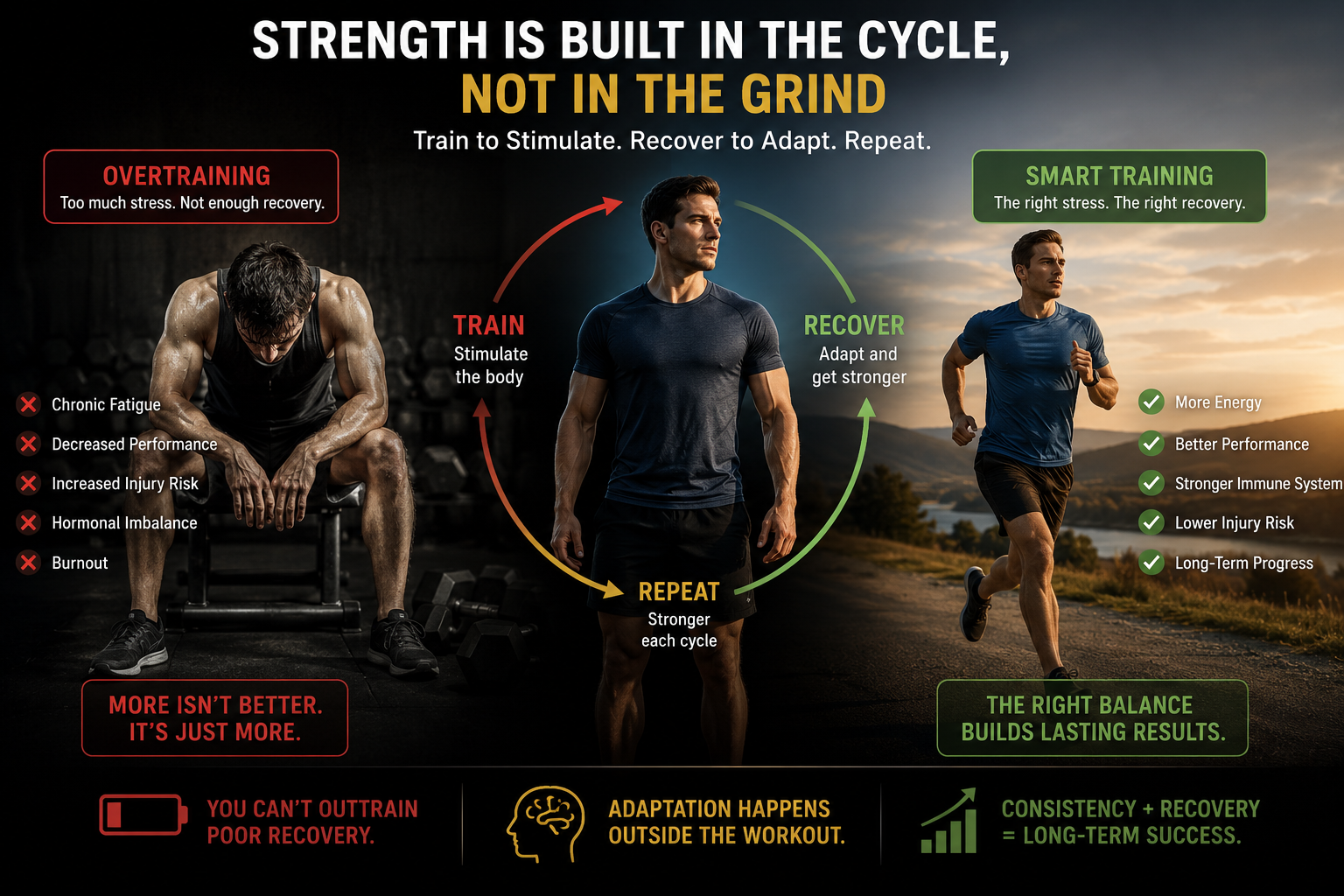
The healthiest heart isn't the one that's constantly pushed to exhaustion. It's the one that has learned to adapt to progressively greater demands.
The body doesn't reward excess.
It rewards the right amount.
Scientists have a name for this principle:
Although the word may sound unfamiliar, you've experienced hormesis your entire life.
Nature's Favorite Teacher: Challenge
Hormesis is the biological phenomenon in which a small, controlled amount of stress produces a beneficial adaptation, while too much stress becomes harmful.
Think of it as the body's way of saying:
"Challenge me... but don't overwhelm me."
We see this principle almost everywhere.
Lift weights and your muscles don't become stronger because they enjoyed the workout. They become stronger because they were challenged just enough to convince the body that it needs to adapt.
Go for a run and your lungs, heart, blood vessels, and muscles gradually become more efficient—not because running is easy, but because your body learned from the challenge.
Spend a short amount of time in a sauna and your body activates heat-response systems. Spend too long in extreme heat and that same environment becomes dangerous.
Brief cold exposure may improve resilience. Prolonged exposure can become life-threatening.
Even many of the healthiest foods we eat contain naturally occurring compounds that create a mild cellular stress, encouraging our own antioxidant and repair systems to become more active.
Again and again, biology teaches the same lesson.
Too little challenge produces little change.
Too much challenge causes damage.
Somewhere in the middle lies adaptation.
Evolution Didn't Build Us to Avoid Stress
Our bodies weren't designed to avoid stress.
They were designed to learn from it.
Every system in the human body such as the muscles, bones, nervous system, cardiovascular system, immune system, even the brain is constantly asking one simple question:
"What do I need to prepare for next?"
When the challenge is appropriate, the body responds with adaptation.
Stronger muscles.
Denser bones.
Improved endurance.
Better coordination.
Greater resilience.
Stress itself isn't the enemy.
Uncontrolled stress is.
What Does This Have to Do With Manual Therapy?
Perhaps more than many people realize.
One of the biggest misconceptions in manual therapy is that effectiveness is determined by how hard someone pushes.
Patients often say things like,
"I want the deepest massage you've got."
Or,
"No pain, no gain."
It's an understandable belief.
After all, if pressure helps...
...wouldn't more pressure help even more?
Not necessarily.
In fact, if hormesis teaches us anything, it's that
more isn't always better. Better is better.
Pressure Is More Than Force
One of the most overlooked concepts in manual therapy isn't anatomy.
It's physics.
Pressure isn't simply how hard someone pushes.
Pressure is actually defined by a simple equation:
Pressure = Force ÷ Area
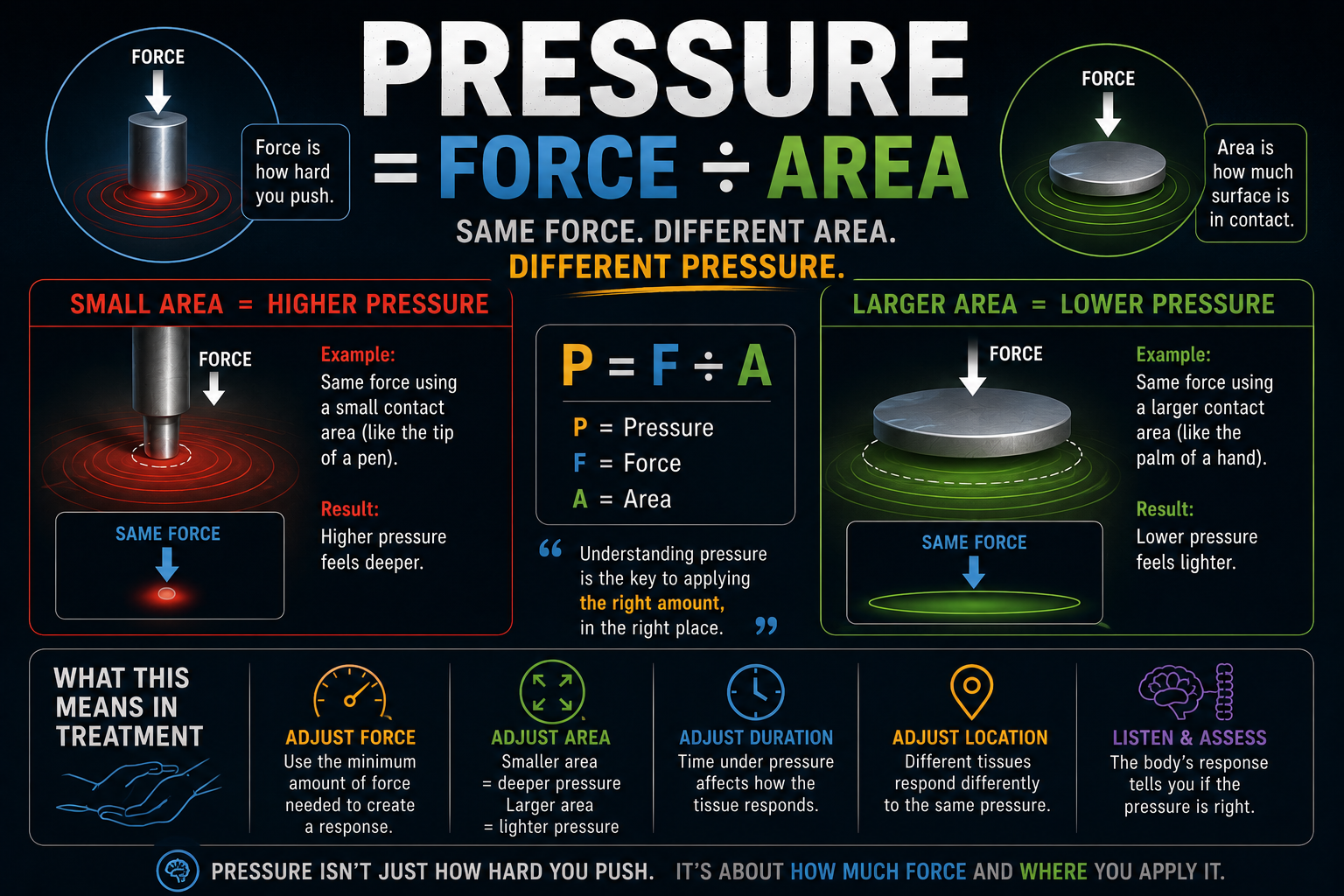
Imagine someone presses into your shoulder using the point of their elbow.
Now imagine they use the palm of their hand while applying the exact same amount of force.
Which one feels deeper?
The elbow.
Why?
Because the same amount of force is concentrated into a much smaller area.
Less surface area means greater pressure.
More surface area means less pressure.
The force never changed.
The pressure did.
Understanding this allows therapists to think differently.
Rather than asking,
"How hard should I push?"
we should be asking,
"How much pressure is actually reaching the tissue?"
Because pressure isn't determined by force alone.
It's influenced by force, contact area, direction, duration, tissue depth, body position, and where that pressure is applied.
Pressure Is a Dose
Perhaps the simplest way to think about manual therapy is this:
Pressure is a dose.
Just like exercise.
Just like medication.
Just like heat.
Just like cold.
Too little pressure may not provide enough sensory information for the nervous system to recognize that anything meaningful has occurred.
Too much pressure may create a completely different problem.
Instead of encouraging adaptation, excessive pressure can increase guarding, provoke pain, and cause the body to become even more protective.
The goal, then, isn't to find the maximum amount of pressure a patient can tolerate.
The goal is to find the minimum effective dose that encourages a meaningful response.
This idea has shaped much of my own clinical approach.
Why I Don't Chase Pain
One of the most common questions I receive is,
"Should this hurt?"
The answer is surprisingly nuanced.
Some discomfort isn't necessarily a bad thing.
After all, exercise can be uncomfortable.
Stretching can be uncomfortable.
Learning new skills can be uncomfortable.
Growth often is.
But discomfort and harm are not the same thing.
My goal isn't to make a treatment as painful as possible.
My goal is to apply a carefully measured mechanical stimulus that the nervous system can interpret, process, and respond to.
That often means finding enough pressure to challenge the system...
...without overwhelming it.
Much like exercise.
Much like hormesis.
The Body Is Always Listening
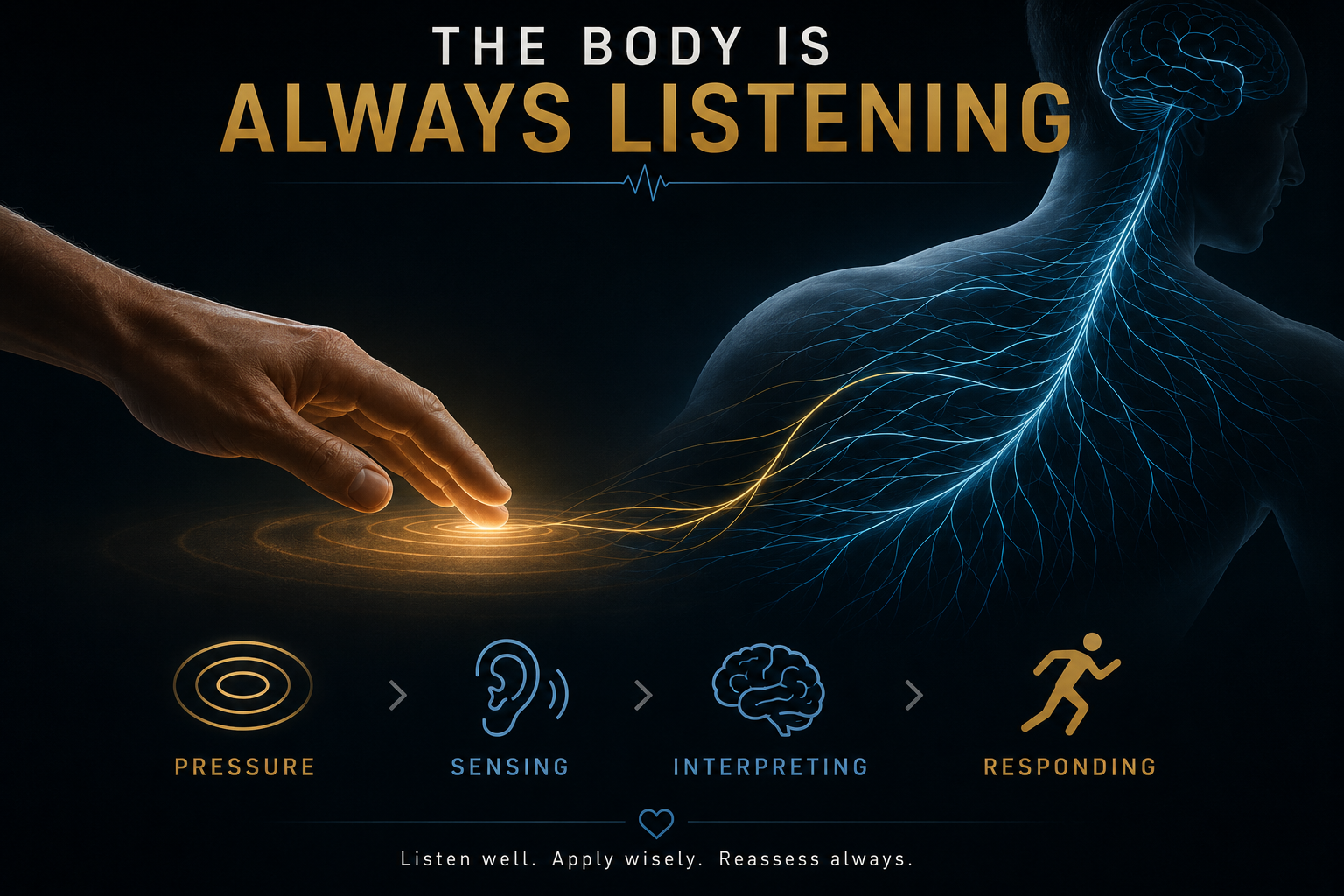
Every time pressure is applied to muscles, tendons, ligaments, fascia, and surrounding tissues, thousands of sensory receptors begin sending information to the brain and spinal cord.
The nervous system immediately starts evaluating that information.
Where is this occurring?
How much pressure is being applied?
Is this threatening?
Should muscle tension increase?
Can protection safely decrease?
These questions are being answered long before we're consciously aware of them.
This is one reason I continually reassess patients throughout treatment.
Rather than assuming pressure alone creates change, I want to know whether the nervous system has actually responded.
Has movement improved?
Has stability changed?
Has muscle function changed?
Those answers guide the next step.
Not the amount of discomfort.
How This Relates to HAM
Within the Hypertonic Anatomy Model (HAM), my focus isn't on applying the greatest amount of force.
It's on applying the appropriate mechanical stimulus to specific anatomical locations while continually reassessing how the body responds.
Muscles are evaluated before treatment.
Pressure is applied with purpose not randomly, and not simply as deeply as possible.
Then the muscles are tested again.
The question isn't,
"Did I press hard enough?"
The question is,
"Did the body respond?"
Hormesis doesn't prove why HAM works.
Science requires much more investigation before anyone can make that claim.
However, hormesis provides a fascinating framework for understanding why carefully dosed mechanical stress may produce better outcomes than either insufficient stimulation or excessive force.
It's a reminder that biology often responds best not to extremes, but to precision.
The Bigger Lesson
Hormesis teaches us something that extends far beyond manual therapy.
Life itself is built on adaptation.
Children learn by struggling.
Athletes improve by training.
Bones strengthen when they're loaded.
The heart becomes more efficient when it's challenged.
Even our minds grow stronger by solving difficult problems.
None of these systems improve because they were protected from every challenge.
They improve because they were given the right challenge.
Perhaps manual therapy should be viewed through the same lens.
Not as a contest of strength between therapist and patient.
Not as an attempt to overpower stubborn muscles.
But as a conversation with the nervous system, one that uses carefully measured pressure to provide meaningful information.
Because in the end, healing may not belong to the therapist who pushes the hardest.
It may belong to the therapist who understands that pressure isn't simply force.
It's force distributed over space.
It's a dose.
And just like every other dose found in nature, the greatest results often come not from using more...
...but from using the right amount.